




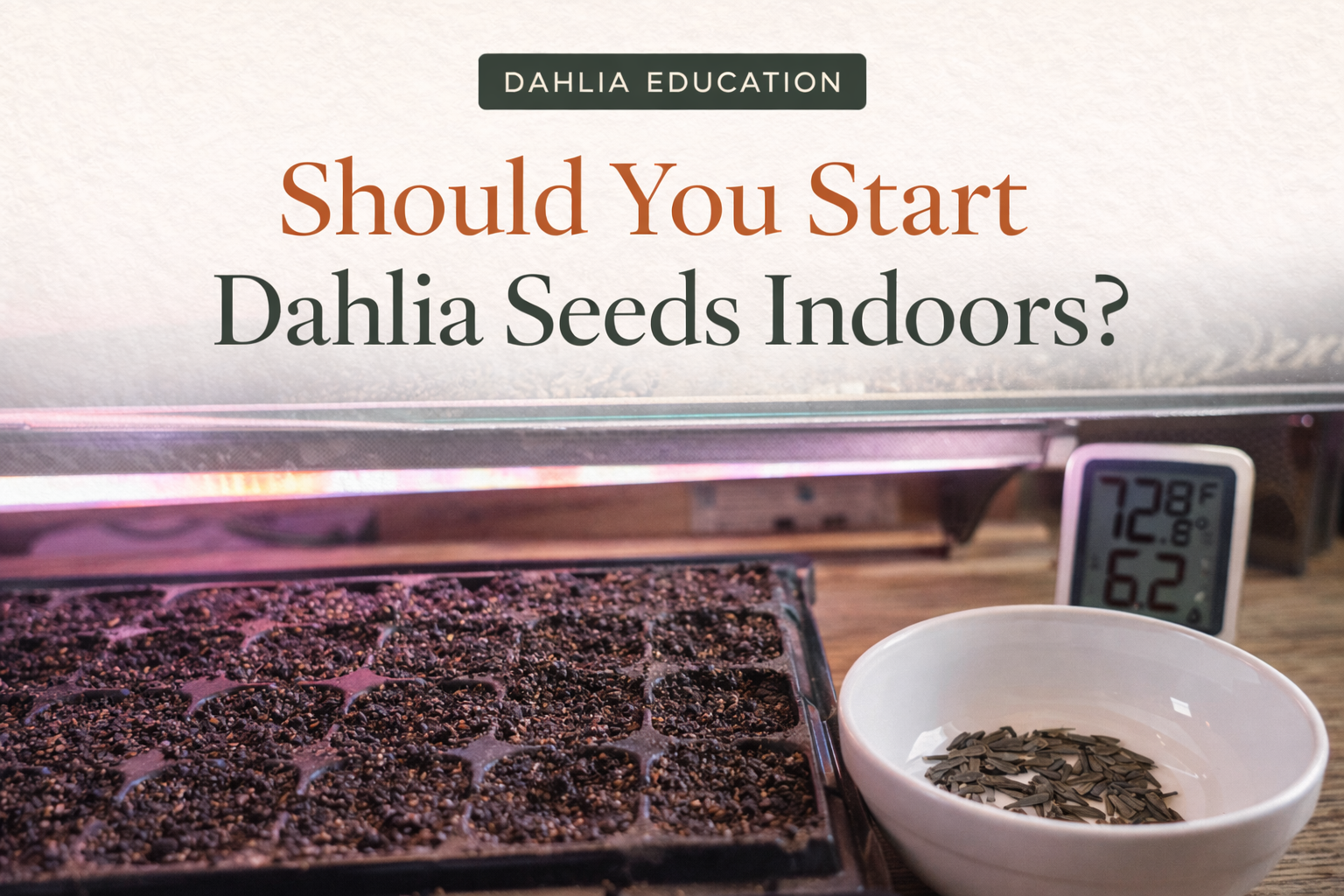
If you have ever stared at a tiny dahlia seed and wondered how something so small turns into a dinner plate-sized bloom, you are not alone. Dahlia seeds feel a little mysterious, especially if you are used to planting tubers instead.
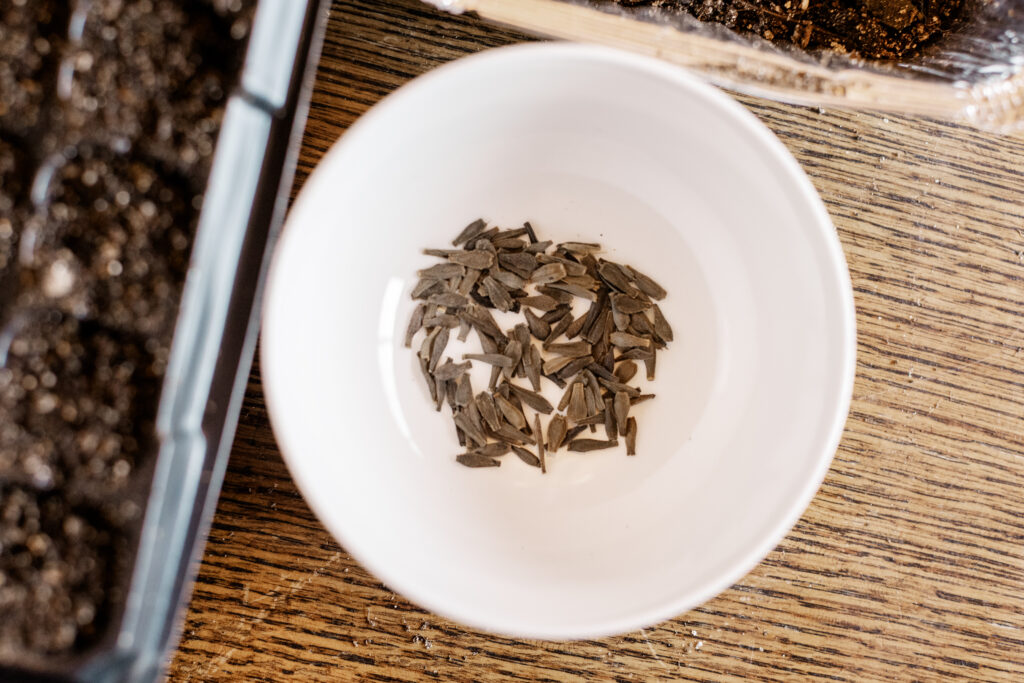
One of the most common questions we get is whether dahlia seeds should be started indoors or planted directly outside. The short answer is that you can do either. The better answer is that starting dahlia seeds indoors gives you more control, stronger plants, and earlier blooms, especially in climates with a shorter growing season. We always start our dahlia seeds indoors here at Cassell Hollow Farm.
The Short Answer
Starting dahlia seeds indoors allows you to control temperature, moisture, and light during the most fragile stage of growth. This leads to higher germination rates, sturdier seedlings, and plants that are ready to grow as soon as they are transplanted outside.
If you live in a colder climate or want blooms as early as possible, starting seeds indoors is usually worth the extra effort.
The Long Answer
Dahlia seeds need warmth and consistency to germinate well. In spring, soil temperatures fluctuate wildly outdoors. A warm afternoon can be followed by a freezing night, and seeds pay the price for that instability.
Starting seeds indoors creates a predictable environment. You decide the temperature, the watering schedule, and the light exposure. Instead of struggling through cold soil, seedlings can focus on developing strong roots and sturdy stems.
Dahlia seeds generally have a lower germination rate because they are drama queens. Starting your seeds indoors will give you a better chance of higher germination.
Another benefit is timing. When you start dahlia seeds indoors, you are essentially giving your plants a head start. By the time your last frost date passes, your seedlings already have a solid root system and several sets of true leaves. That head start often translates to earlier flowering once they are planted out.
This is especially important for seed-grown dahlias. Unlike tubers, seed-grown plants need time to grow, branch, and mature before they can bloom. Giving them those early weeks indoors can make the difference between a handful of late-season blooms and a plant that flowers generously.
When This Advice Matters Most
Starting dahlia seeds indoors is especially helpful if any of the following apply to you.
- You live in a cold climate or short season growing zone
- Your last frost date is late in spring
- You want earlier blooms from seed-grown dahlias
- You are growing dahlias for cut flowers
- You want to evaluate seedlings early and select the strongest plants
If you live in a very warm climate with a long growing season, direct sowing can work just fine. Indoor starting is a tool, not a requirement.
Common Mistakes to Avoid
One of the biggest mistakes is starting seeds too early. Dahlia seedlings grow quickly, and starting them far ahead of your last frost date can result in leggy plants that outgrow their space.
Another common issue is insufficient light. A sunny window is rarely enough. Without adequate light, seedlings stretch and weaken. A simple grow light placed a few inches above the plants makes a huge difference.
Overwatering is another frequent problem. Seedlings prefer evenly moist soil, not soggy conditions. Good drainage and restraint go a long way.
What We Do on Our Farm
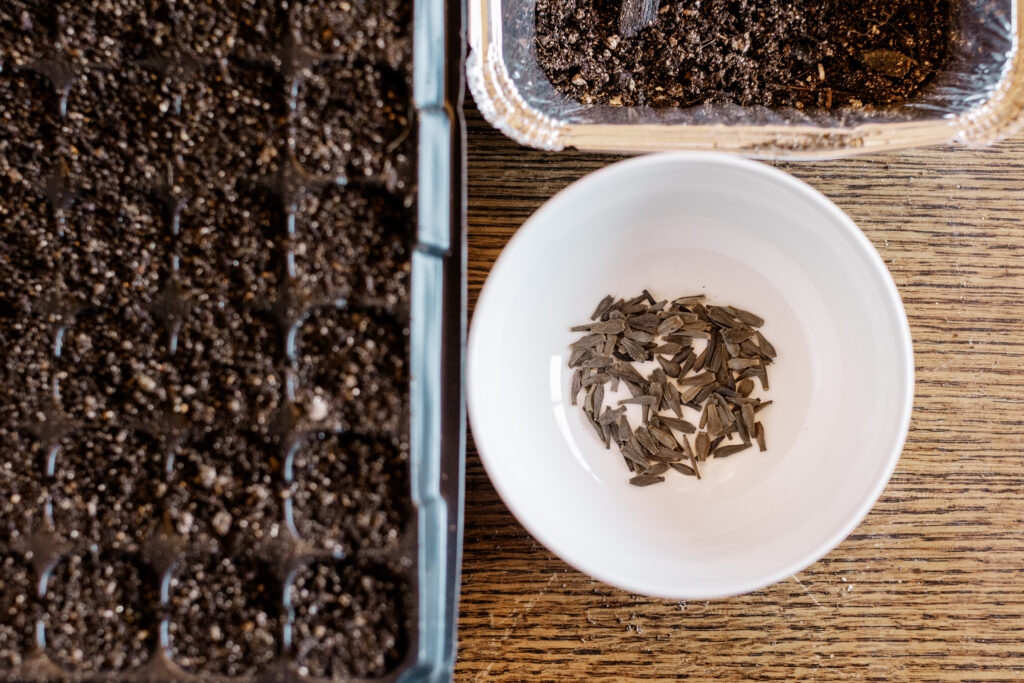
At Cassell Hollow Farm, we start our dahlia seeds indoors every year. Our growing season in the Driftless Region is limited, and we want our seed-grown dahlias to bloom as early and reliably as possible.
We start seeds indoors several weeks before our last frost date, using basic seed starting trays and grow lights. This allows us to evaluate plant vigor early and gives our seedlings time to establish strong roots before transplanting them into the field.
Frequently Asked Questions
When should I start dahlia seeds indoors?
Most growers start dahlia seeds indoors four to six weeks before their last expected frost date. This timing gives seedlings enough time to develop without becoming overgrown.
Can I plant dahlia seeds directly in the ground?
Yes, it is possible. Dahlia seeds can be direct sown after the danger of frost has passed. In cooler climates, this usually results in later blooms and lower germination rates.
Do seed-grown dahlias produce tubers?
Yes. Seed-grown dahlias will form tubers by the end of the season, though they are often small the first year. We can still divide the tubers as normal for most seedlings. If the tubers are on the REALLY small side the first year, we will save those tubers in the clump whole (not divide) and plant this whole clump the next year.
Will seed-grown dahlias look like the parent plant?
No. Open-pollinated dahlia seeds produce unique plants. Each seed is a genetic surprise. We offer open-pollinated dahlia seeds, but we make sure to keep track of which variety serves as the seed parent. When you purchase open-pollinated dahlia seeds and know the parent variety, there is a good chance the resulting blooms will be very similar to that parent!
Final Thoughts
Starting dahlia seeds indoors is not about doing things the hard way. It is about stacking the odds in your favor. A little effort early in the season can lead to healthier plants and more flowers when it matters most.
If indoor seed starting feels intimidating, start small. Even a handful of seedlings can teach you a lot and build confidence for future seasons.
If you are planning to grow dahlias from seed this year, save this post for reference and explore our other dahlia education guides.
When you are ready, browse our open-pollinated dahlia seeds to get started.


PLEASE COMMENT BELOW