





If you’ve been watching your dahlias grow over the past few weeks, you may be reaching the point where they’re finally taking off. They’re putting on leaves, stretching taller every day, and looking healthy.
And then someone tells you to cut the top off.
It sounds completely backward.
After all, you’ve spent weeks waiting for those tubers to sprout and grow. Why would you intentionally remove healthy growth?
The answer is simple: pinching encourages your dahlia to branch, creating a fuller plant that produces more stems and, ultimately, more flowers.
Here at Cassell Hollow Farm, we’re in the middle of pinching thousands of plants during the month of June. It always feels a little wrong making that first cut, but every year we’re rewarded with stronger plants and armloads of blooms later in the season.
What Does It Mean to Pinch a Dahlia?
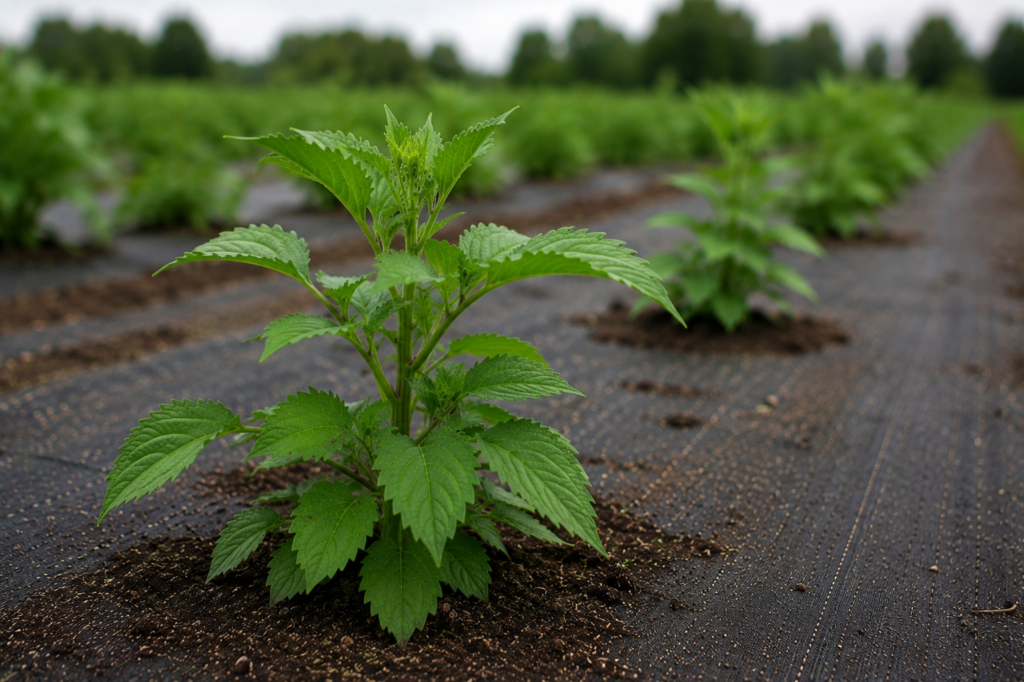
Pinching simply means removing the growing tip from the main stem of a young dahlia plant.
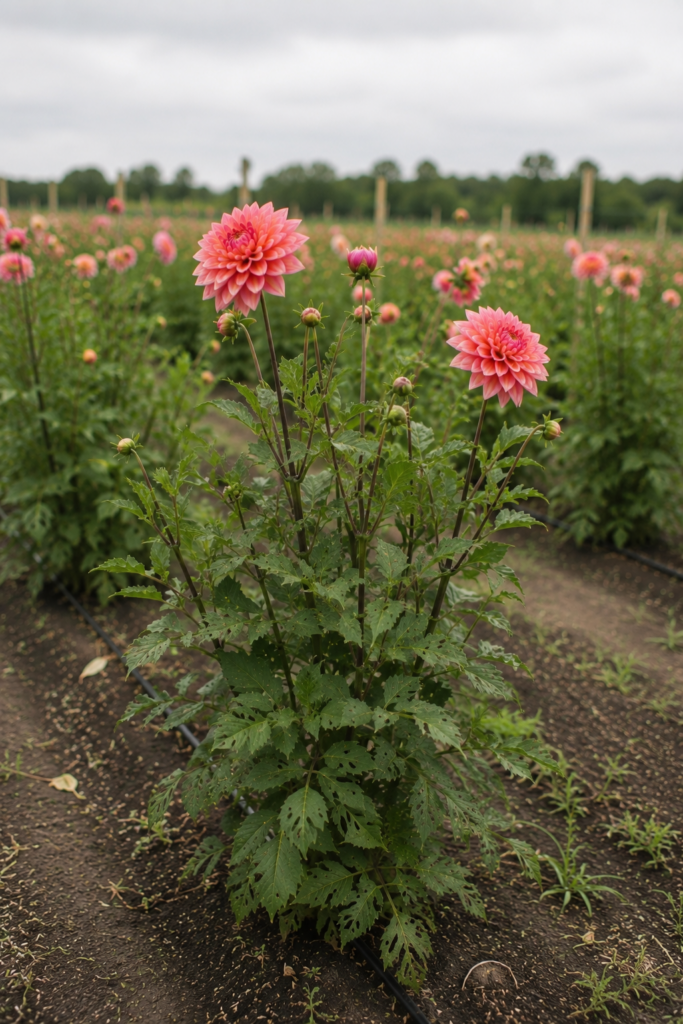
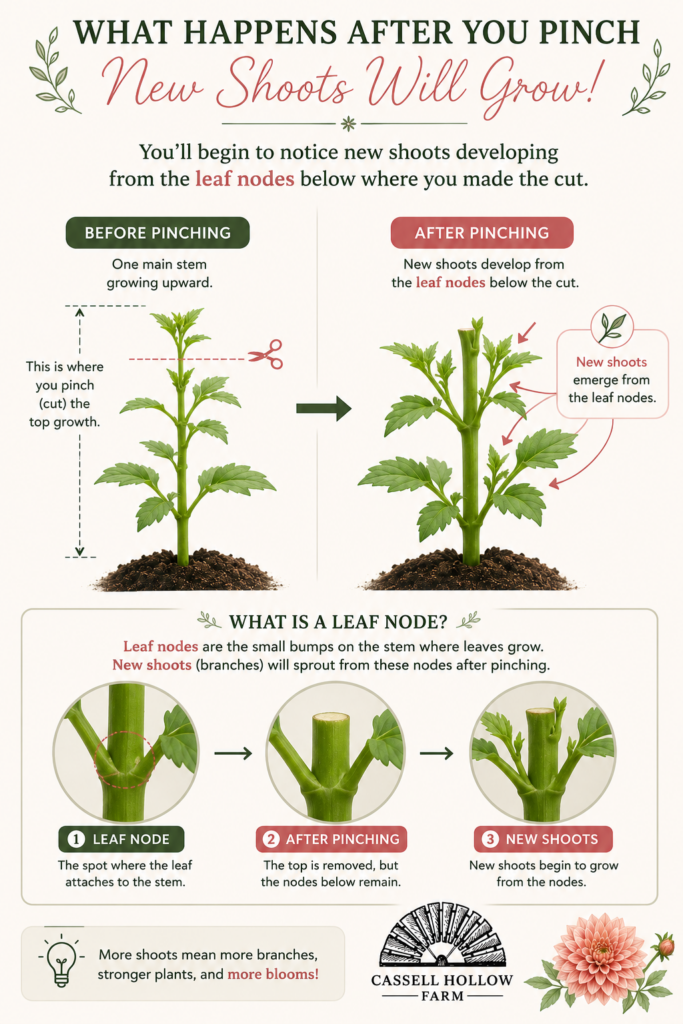
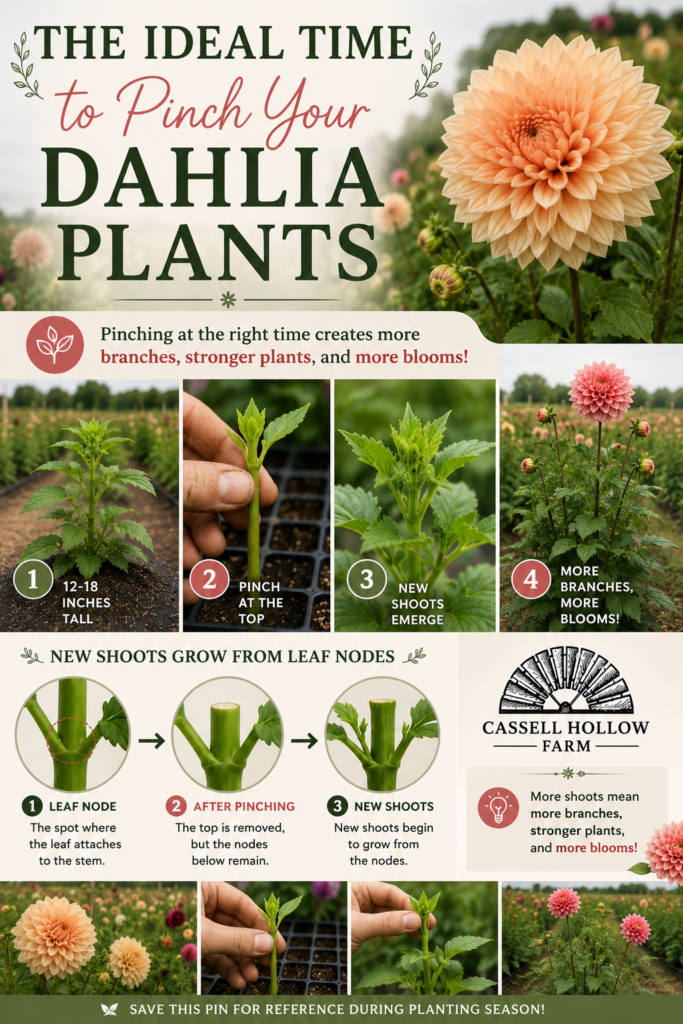
Normally, a dahlia wants to grow upward from a single dominant stem. When you remove that growing tip, the plant responds by sending out multiple side shoots from the leaf nodes below the cut.
Instead of one main stem, you end up with several.
More stems mean more places for flowers to form later in the season.
Think of it as encouraging your dahlia to become wider and bushier instead of taller and lankier.
Why Pinch Dahlias?
The biggest benefit is simple: more flowers.
Every new branch that develops after pinching has the potential to produce blooms. While pinching may slightly delay your first flowers, most gardeners find the increased flower production is well worth the wait.
Pinched dahlias also tend to develop stronger stems and a more balanced shape. This is especially helpful here in Wisconsin, where summer storms and strong winds can quickly topple tall, leggy plants.
For cut flower growers, pinching is almost always worth the effort. More branching means more harvestable stems throughout the season.
When Should You Pinch Your Dahlias?
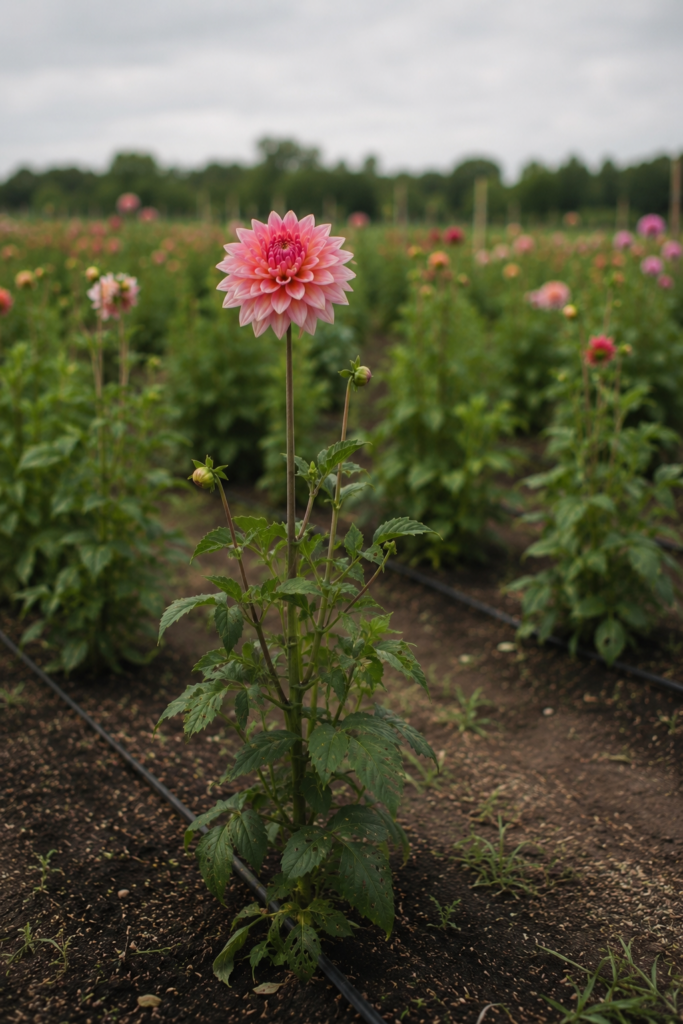
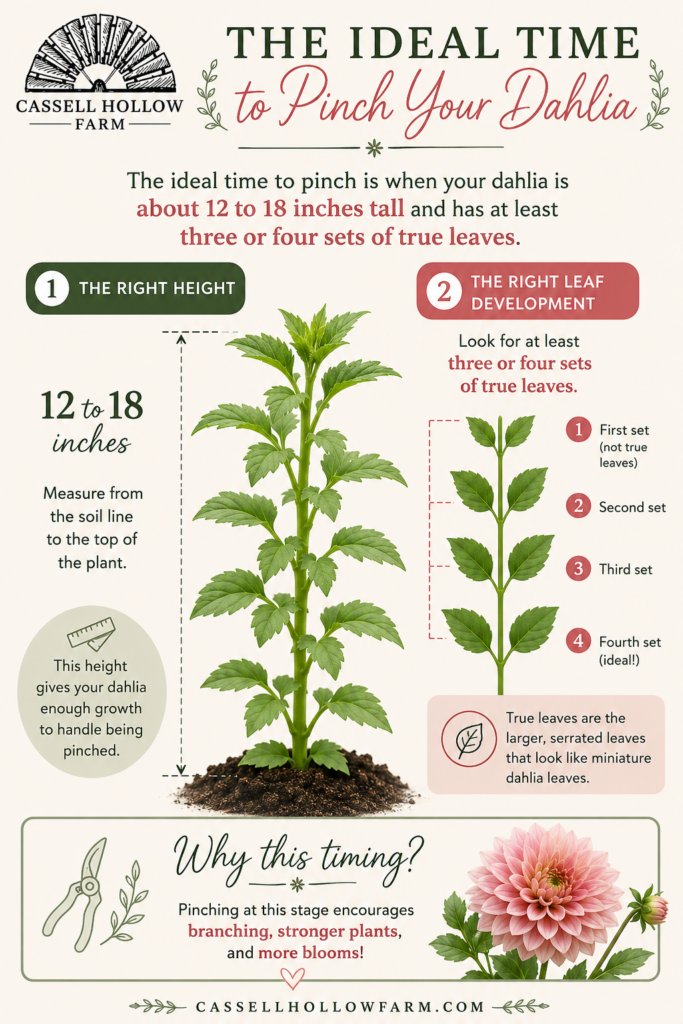
The ideal time to pinch is when your dahlia is about 12 to 18 inches tall and has at least three or four sets of true leaves.
For many Wisconsin gardeners, that falls somewhere between mid-June and early July, depending on when the tubers were planted and how warm the spring has been.
If your plant is only a few inches tall, wait a little longer.
If flower buds are already forming, you’ve likely missed the ideal window, but that’s perfectly okay. Your dahlia will still bloom beautifully even if you don’t pinch it.
Pinching is a technique for maximizing performance, not a requirement for success.
Exactly Where Do You Pinch?
This is the part that makes many gardeners nervous, but it doesn’t need to be complicated.
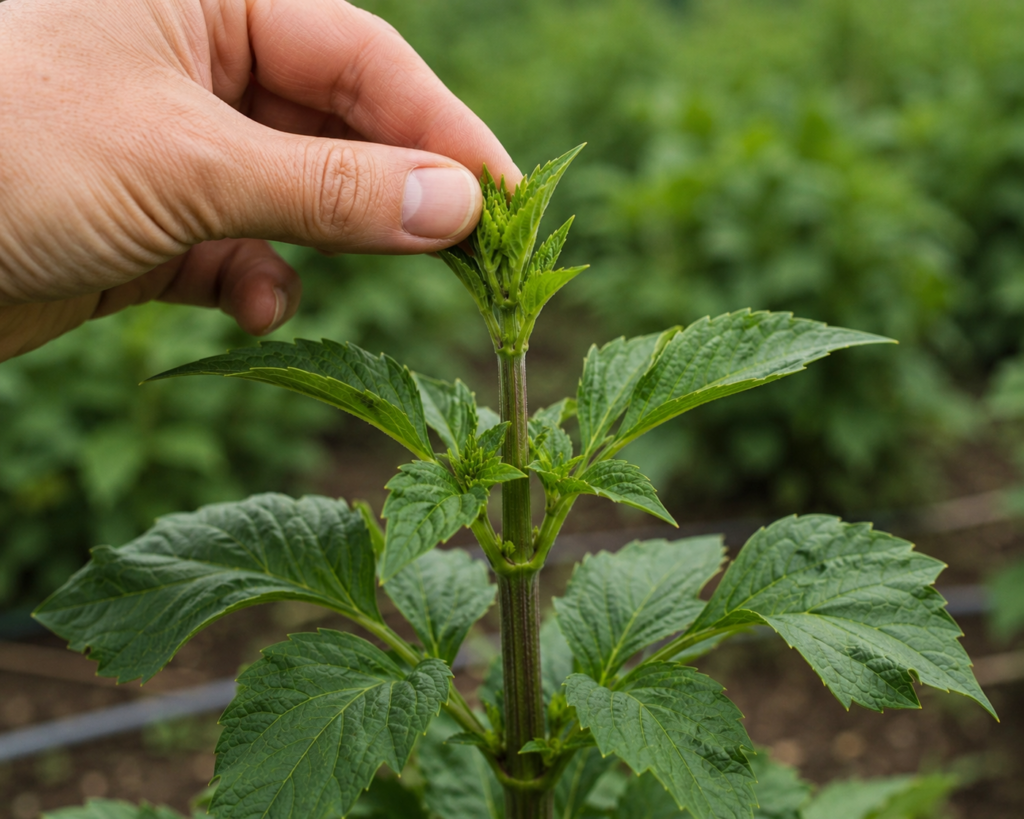
Locate the third or fourth set of leaves from the base of the plant. Then simply remove the growing tip just above that leaf set.
You can use your fingers, garden snips, or pruners. Remember to sanitize cutting tools between plants!
Whether you pinch above the third set of leaves or the fourth, your dahlia will respond by producing side branches. And your plant isn’t measuring, so no need to bring out a ruler to make sure it is tall enough.
The goal is simply to remove the dominant growing point while leaving plenty of healthy foliage below.
What Happens After You Pinch?
For the first few days, it may look like you’ve set your plant back.
Don’t panic.
Within a week or two, you’ll begin to notice new shoots developing from the leaf nodes below where you made the cut.
Those shoots quickly become new stems.
By midsummer, most gardeners can barely tell where the original pinch occurred. Instead, they’ll have a fuller, bushier plant that looks healthier and produces more blooms than it likely would have otherwise.
Will Pinching Delay Blooms?
Yes, but usually only by about one to two weeks.
This is one of the most common concerns gardeners have, especially if they’re anxiously waiting for their first flowers of the season.
While the first blooms may arrive slightly later, pinched plants typically produce significantly more flowers over the course of the season.
In other words, you’re trading a small amount of patience now for a larger flower show later.
Don’t Throw Away the Piece You Removed
Here’s a bonus tip for dahlia lovers!
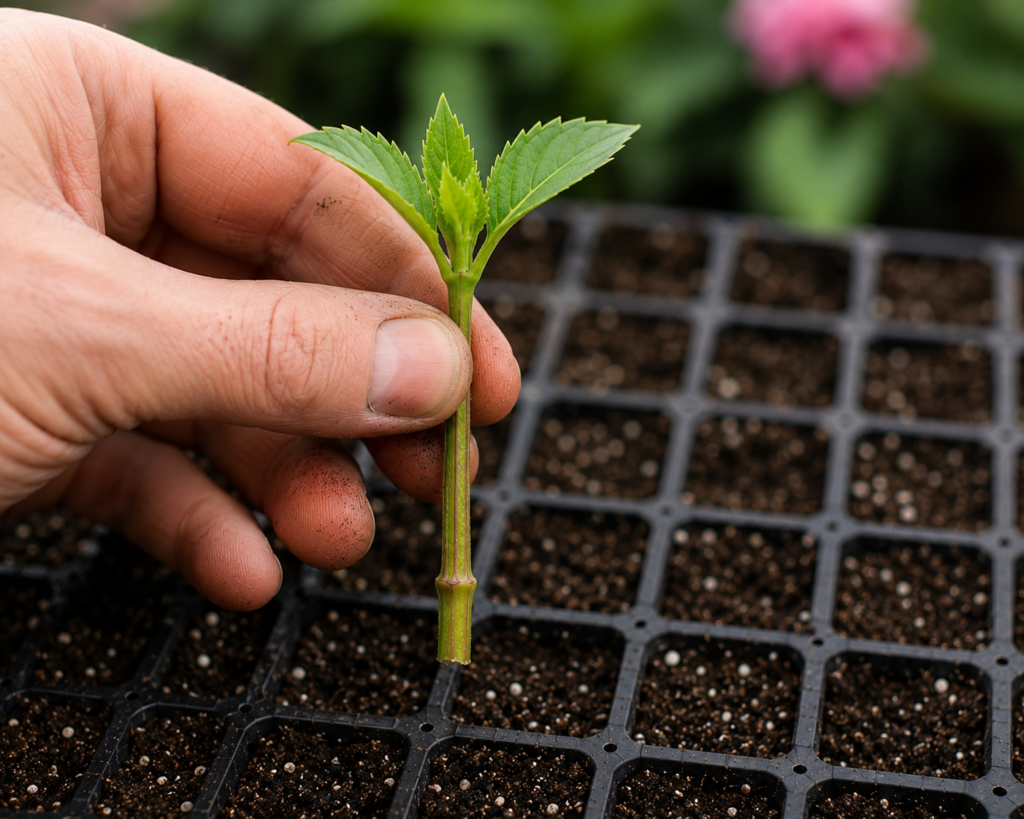
The growing tip you remove can often be rooted and turned into an entirely new plant.
Many growers use the pinching season as an opportunity to propagate additional dahlias. If the cutting has several sets of leaves and is still fresh, it can often be rooted in moist potting mix and grown on as a cutting.
While first-year cuttings don’t always produce large tubers, they can still provide flowers and become productive plants in future seasons.
What We Do at Cassell Hollow Farm
Every June, we work our way through thousands of dahlia plants, pinching each one as it reaches the right height.
Some varieties branch naturally and hardly seem to notice.
Others look dramatically different just a few weeks after being pinched.
The process takes time, but we’ve found it’s one of the simplest ways to increase stem production and improve plant structure without spending a dime.
If you’re standing in your garden debating whether to make the cut, our advice is simple:
Go for it.
Your dahlia may look a little shorter for a week or two, but by late summer, you’ll likely be rewarded with more stems, more flowers, and a stronger plant overall.
Frequently Asked Questions About Pinching Dahlias
What happens if I don’t pinch my dahlias?
Nothing bad.
Your dahlias will still grow and flower with multiple blooms. Pinching simply encourages additional branching and can increase the total number of blooms produced throughout the season.
Can I pinch dahlias after they have flower buds?
You can, but it usually isn’t recommended.
Once buds have formed, pinching removes flowers that are nearly ready to bloom. At that point, it’s generally best to let the plant continue growing naturally. After that first bloom, we recommend a deep cut right above a true set of leaves, which will achieve the same additional branching as pinching does.
Should I pinch dinnerplate dahlias?
Yes.
Dinnerplate varieties respond to pinching just like other dahlias and often benefit from the additional branching.
Do all dahlia growers pinch their plants?
No.
Many home gardeners skip pinching entirely and still grow beautiful dahlias. However, most flower farmers and cut flower growers pinch stems to increase stem production.
Can I root the cutting after pinching?
Absolutely.
Many dahlia growers use the removed growing tips as cuttings. If rooted successfully, those cuttings can become entirely new plants.
Final Thoughts
Pinching may feel counterintuitive the first time you do it, but it’s one of the easiest ways to encourage fuller plants and more flowers.
If your dahlias are around 12 to 18 inches tall and have several sets of leaves, now is the perfect time to grab your snips and make the cut.
Your future bouquet-making self will thank you.
Happy growing!

Don’t forget to save this post for later by pinning the graphic below to Pinterest so you can easily reference it again during planting season.


PLEASE COMMENT BELOW