




If you’ve found yourself standing in the garden staring at a few yellow dahlia leaves and wondering what went wrong, you’re not alone.
Every year around this time, I start seeing the same question pop up in dahlia groups and in my inbox:
“Why are my dahlia leaves turning yellow?”
The good news is that yellow leaves don’t automatically mean something is wrong.
In fact, if you’re growing dahlias successfully, you’ll probably see some yellow leaves at some point during the season.
The key is figuring out whether your dahlia is simply doing what dahlias do or if it’s trying to tell you something.
Here’s how I diagnose yellow leaves on our dahlias at Cassell Hollow Farm:
First, Look at Where the Yellow Leaves Are Located
Before you start adjusting your watering schedule, applying fertilizer, or assuming the worst, take a close look at where the yellow leaves are appearing.
This one simple observation can often tell you whether you have a problem at all.
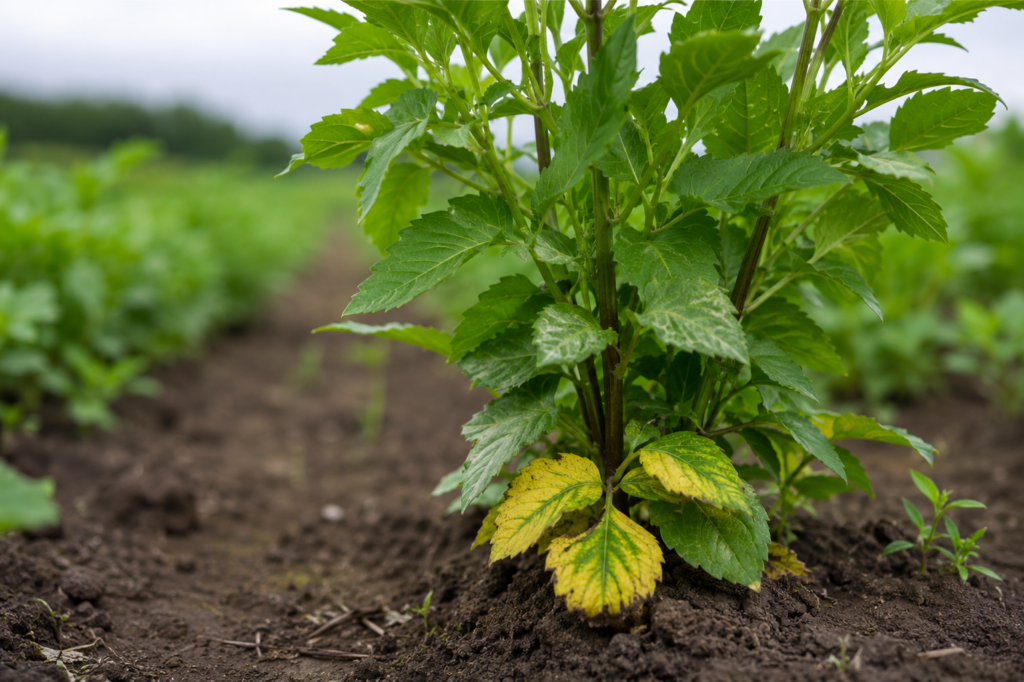
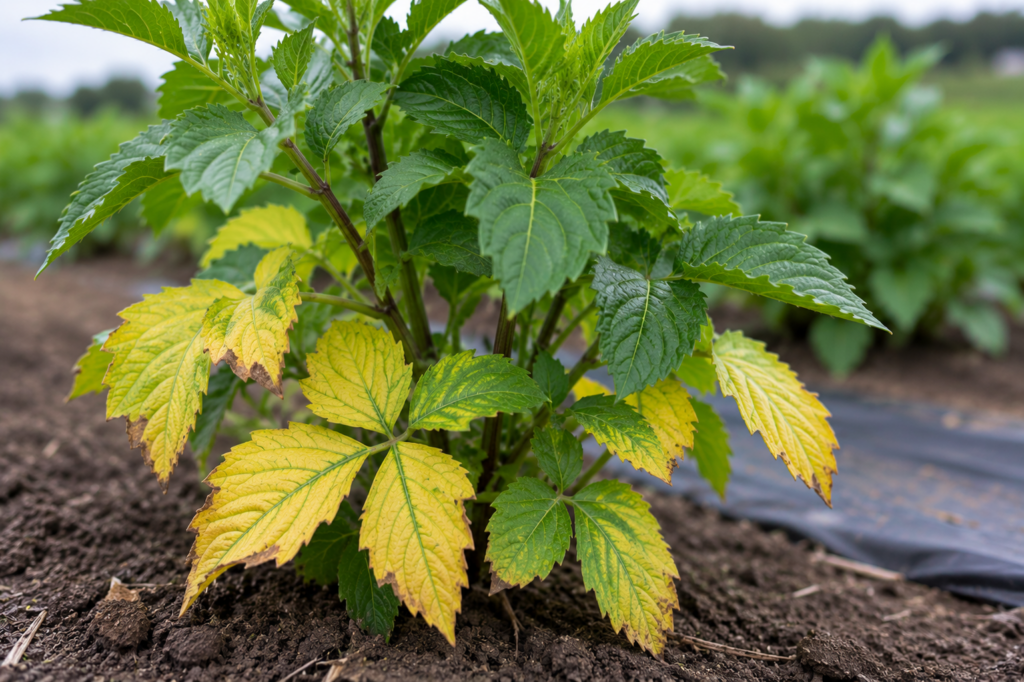
You See That Only the Bottom Leaves Are Yellow
If the yellowing is limited to the lowest leaves on an otherwise healthy plant, there’s a good chance everything is perfectly normal.
As dahlia plants grow taller and produce more foliage, the oldest leaves near the bottom receive less sunlight. Eventually, those leaves stop contributing much to the plant and begin to yellow.
It’s similar to what happens with tomato plants later in the season.
On our farm, I regularly remove yellowing lower leaves throughout the summer and never think twice about it.
Signs this is normal:
- New growth is healthy and green
- The plant is actively growing
- The yellowing is limited to older leaves near the base
- No spots, distortion, or wilting are present
You See Yellow Leaves Throughout the Dahlia Plant. Let’s Dig Deeper:
When yellowing extends beyond a few lower leaves, it’s time to investigate further.
Most causes fall into one of four categories:
- Water issues
- Nutrient deficiencies
- Herbicide damage
- Disease
Let’s walk through each one.
1a. Too Much Water
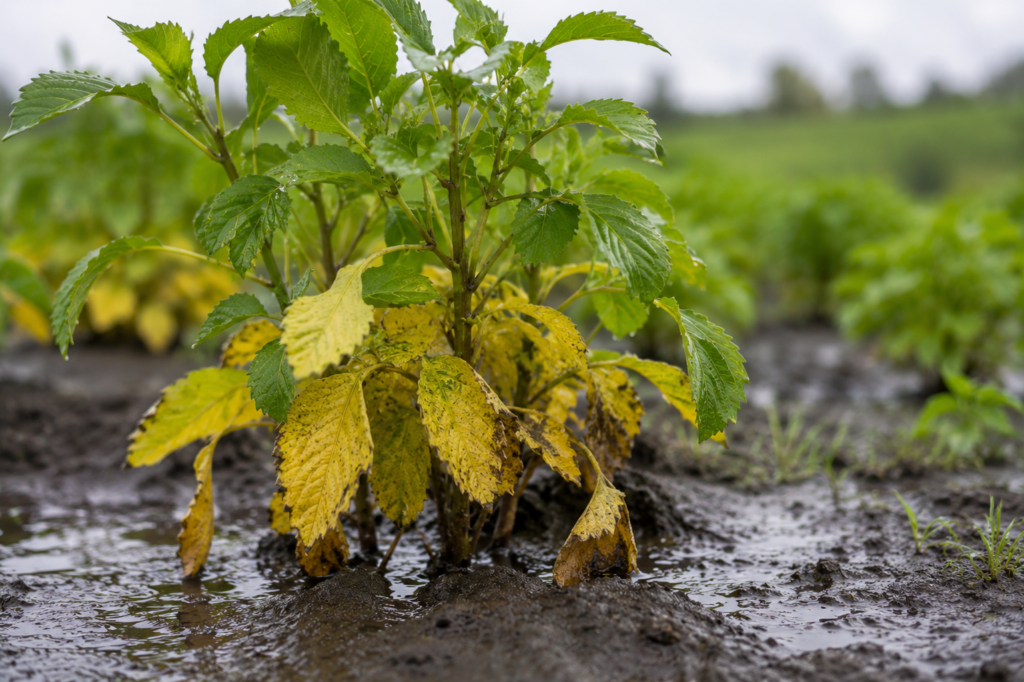
One of the most common causes of yellow leaves is overwatering.
This surprises many gardeners because yellow leaves often look like a sign that a plant needs more water.
In reality, overwatered dahlias frequently turn yellow because saturated soil prevents roots from functioning properly.
On our farm, this is most likely to happen after a stretch of heavy rain rather than from irrigation.
Signs of overwatering include:
- Yellowing throughout the plant
- Soft stems
- Slow growth
- Drooping despite wet soil
- Soil remaining soggy for days
If this sounds familiar, stop watering and allow the soil to dry before adding additional moisture.
1b. Not Enough Water
Underwatering can also trigger yellow leaves, although the symptoms usually look a bit different.
When moisture becomes limited, the plant begins conserving resources. Older leaves are often sacrificed first while the plant focuses on keeping newer growth alive.
Look for:
- Dry soil several inches below the surface
- Wilting during cooler parts of the day
- Crispy leaf edges
- Stunted growth
A deep watering once or twice per week is generally better than frequent shallow watering.
Deep watering encourages roots to grow downward, creating stronger plants that are better equipped to handle summer heat.

2. Nutrient Deficiencies
Dahlias are vigorous plants. By June and July, they’re showing tremendous growth.
That growth requires nutrients.
Nitrogen deficiency is one of the most common nutrient-related causes of yellow foliage.
Typically, you’ll notice older leaves yellowing first while newer growth remains greener.
Before reaching for fertilizer, though, remember that yellow leaves don’t automatically equal nutrient deficiency.
A soil test is always the best place to start.
Healthy soil creates healthy plants, which is one reason we focus heavily on building soil health rather than relying solely on fertilizer.
3. Herbicide Drift: The Cause of Yellow Leaves Nobody Wants to Find
In rural Wisconsin, we occasionally have to consider herbicide drift.
If yellowing is accompanied by twisted growth, curled leaves, or distorted stems, herbicide exposure may be the culprit.
Symptoms often include:
- Twisted new growth
- Curling leaves
- Misshapen stems
- Unusual plant growth patterns
Unfortunately, there’s no quick fix.
The best approach is usually to keep the plant healthy and wait to see whether it grows through the damage.

4. Are the yellow leaves on a dahlia plant due to disease?
Disease is usually not my first suspect when I see yellow leaves in early summer.
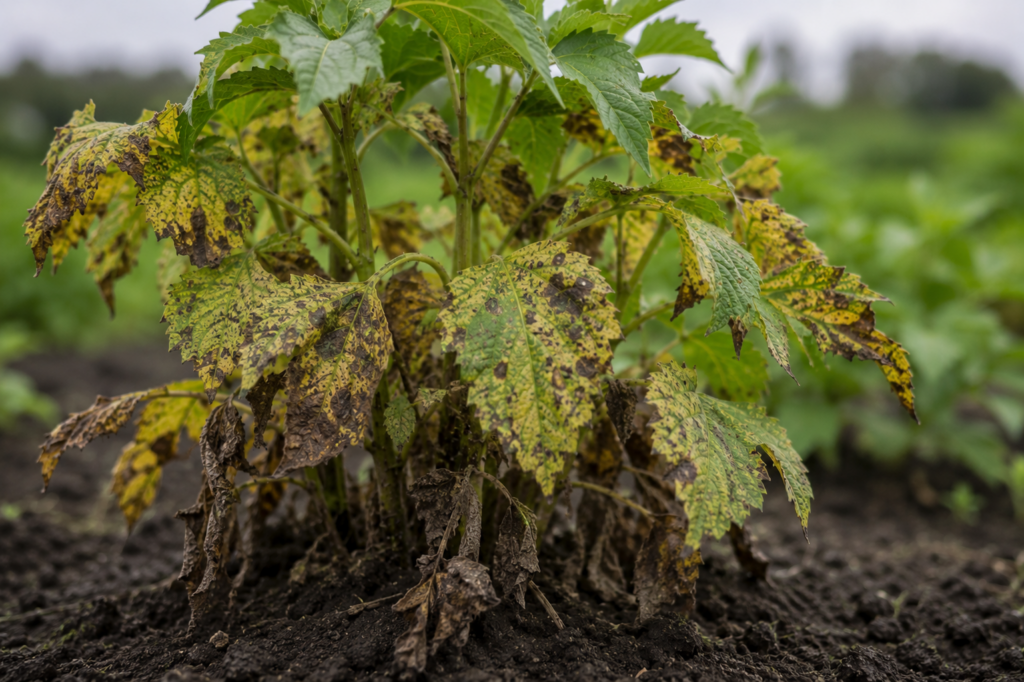
However, if yellowing is accompanied by spotting, mold, lesions, or rapid decline, disease becomes more likely.
Watch for:
- Brown or black spots
- Moldy growth
- Leaves rapidly deteriorating
- Multiple plants affected
Removing affected foliage and improving airflow around plants can often help reduce disease pressure.
When Should You Actually Worry about Yellow Leaves on a Dahlia Plant?
Here’s the rule I use on our farm:
If the newest growth looks healthy, the plant is actively growing, and the yellowing is limited to a few older leaves, I don’t worry.
If yellowing is spreading, growth has stalled, or other symptoms are present, then it’s time to investigate.
Most yellow leaves are not an emergency.
And that’s important to remember because dahlias are remarkably resilient plants.
Frequently Asked Questions About Yellow Dahlia Leaves
Should I remove yellow leaves from my dahlias?
Yes. If a leaf is completely yellow, it’s no longer contributing much to the plant. Removing yellow leaves can improve airflow around the plant and help keep your dahlia looking tidy.
Why are only the bottom leaves on my dahlia turning yellow?
This is often completely normal. As dahlia plants grow taller, the oldest leaves near the base receive less sunlight and naturally begin to yellow and die back. If the rest of the plant looks healthy, there’s usually no cause for concern.
Can overwatering cause yellow leaves on dahlias?
Absolutely. In fact, overwatering is one of the most common causes of yellow foliage. Dahlia roots need oxygen as much as they need moisture, and constantly wet soil can lead to yellowing leaves and poor growth.
Will yellow dahlia leaves turn green again?
In most cases, no. Once a leaf has turned yellow, it typically won’t recover. Focus on identifying the cause of the yellowing and encouraging healthy new growth.
Should I fertilize my dahlias if the leaves are turning yellow?
Maybe. Yellow leaves can sometimes indicate a nutrient deficiency, but they can also be caused by watering issues, natural aging, or environmental stress. Before adding fertilizer, take a closer look at the entire plant and consider a soil test if nutrient deficiency is suspected.
Can heat cause dahlia leaves to turn yellow?
Yes. Extended periods of high temperatures, especially when combined with inconsistent watering, can stress dahlias and lead to yellowing foliage. Most plants recover once temperatures moderate and watering is consistent.
When should I worry about yellow leaves on dahlias?
I start paying closer attention when yellowing spreads rapidly, affects new growth, appears alongside spots or mold, or causes the plant to stop growing. A few yellow lower leaves on an otherwise healthy plant rarely concern me.
What We Do at Cassell Hollow Farm When We Find Dahlia Plants with Yellow Leaves
At Cassell Hollow Farm in Wisconsin’s Driftless Region, we grow thousands of dahlia plants each season, including production varieties, Rainbow Row plants, and seedlings we’re evaluating for future introductions.
Because we grow at this scale, we see just about every dahlia issue imaginable, from perfectly normal yellowing lower leaves to nutrient deficiencies, weather stress, and everything in between.
One of the biggest lessons we’ve learned is that a few yellow leaves rarely tell the whole story. Healthy dahlia plants are constantly growing, shedding older foliage, and responding to changing weather conditions throughout the season.
That’s why we always encourage gardeners to evaluate the entire plant before assuming something is wrong.
Once we have evaluated a plant in its entirety, we then evaluate it again at a later date after applying changes to watering and fertilizing schedules. If the plant hasn’t started on the road to recovery, we pull it from our fields out of utmost care and concern for our future dahlia tuber customers.
Final Thoughts on Determining the Cause of Yellow Leaves on Dahlia Plants
One of the hardest parts of growing dahlias is learning which problems actually require action and which ones are simply part of the growing process.
Yellow leaves can certainly signal an issue.
But more often than not, they’re simply telling you that your plant is growing, aging, and adapting to its environment.
So before you panic, take a step back and look at the entire plant.
A few yellow leaves rarely tell the whole story.
And sometimes, they’re not a problem at all.
Sometimes a yellow leaf is just a yellow leaf.
Until next time,

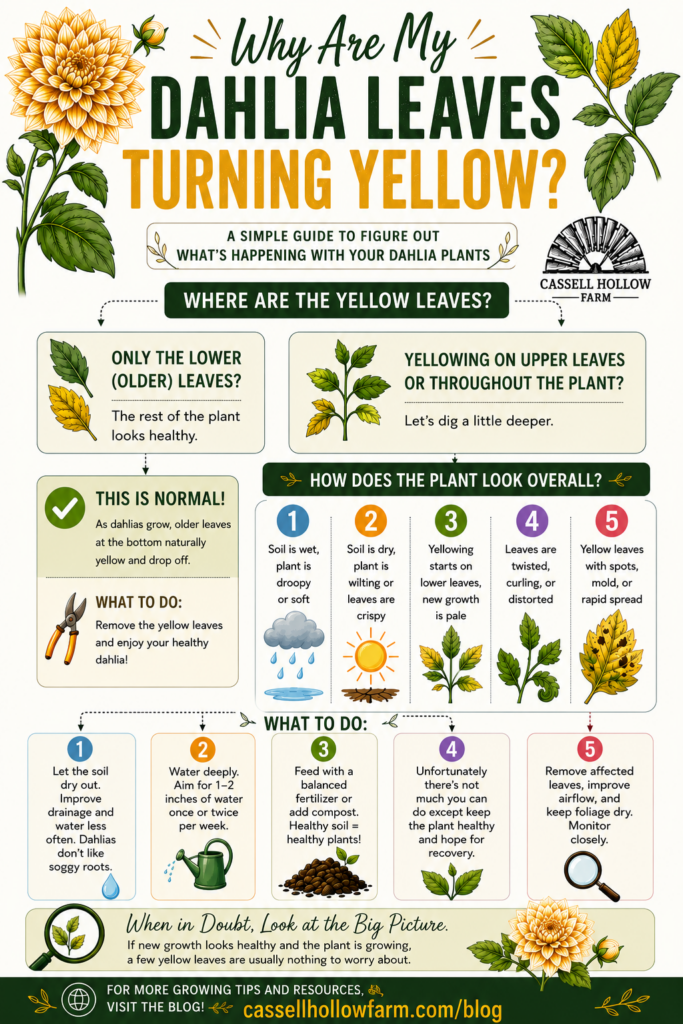
Don’t forget to save this post for later by pinning the graphic below to Pinterest so you can easily reference it again during planting season.


PLEASE COMMENT BELOW