






The skincare industry has recently seen a growing interest from consumers wanting to use natural oils. The oils promise to hydrate, nourish, and rejuvenate the skin while using only the purest ingredients from nature. With its unique properties, hazelnut oil stands out amongst other natural oils, so we are proud to grow and produce this skincare powerhouse. But exactly how does hazelnut oil compare to other natural skincare oils such as coconut, jojoba, and argan? This article will examine the benefits and downfalls of hazelnut oil vs. other oils and how they compare regarding skincare benefits, application, and overall effectiveness.

Hazelnut Oil: An Overview
Origin and Composition of Hazelnut Oil
Hazelnut oil is created through an extraction process from the nuts grown on a hazelbush. Hazelnut oil is light, has an easily absorbable texture, and essential fatty acids, vitamins, and antioxidants. Key components include oleic acid, linoleic acid, vitamin E, and phytosterols. Accordingly so, these elements make hazelnut oil a potent moisturizer with anti-inflammatory and antioxidant properties.
Hazelnut Oil’s Benefits for Skincare
- Moisturization: Hazelnut oil deeply penetrates the skin therefore it provides great hydration without leaving an oily residue. Its emollient properties help to smooth and soften the skin.
- Antioxidant Protection: Free radical damage, which can lead to premature skin aging, can happen through UV radiation, pollution, smoking, and stress. Rich in vitamin E, hazelnut oil helps protect the skin from these types of damage.
- Anti-inflammatory: Hazelnut oil has natural anti-inflammatory properties therefore it can help reduce redness and soothe irritated skin.
- Astringent Qualities: Hazelnut oil has astringent properties that help tighten and tone the skin, making it an excellent choice for oily or combination skin.
- Non-comedogenic: Hazelnut oil is non-comedogenic, so it is unlikely to clog pores, making it suitable for acne-prone skin.
Did you know? Cassell Hollow Farm grows over 3,000 Midwest hazelnut bushes on our farm. We harvest the hazelnuts each fall and press the oil ourselves. Shop our very own Wisconsin-grown and loved hazelnut oil here!
Comparison of Hazelnut Oil vs Other Oils
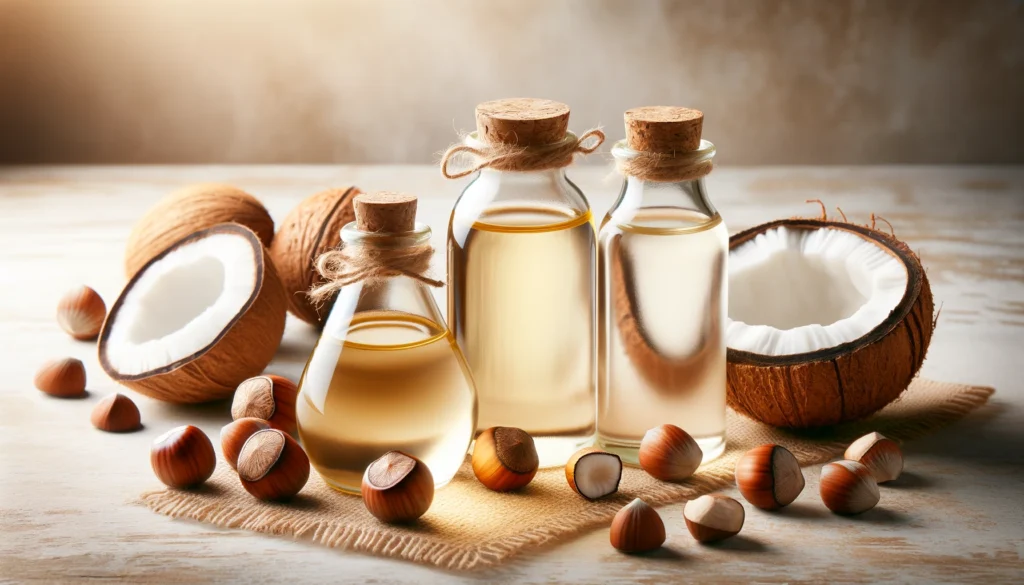
Hazelnut Oil versus Coconut Oil
Origin and Composition of Coconut Oil – Coconut oil is extracted from mature coconuts and contains a high percentage of saturated fats, particularly lauric acid, which gives it its moisturizing properties. It also contains vitamin E and other antioxidants.
Coconut Oil’s Benefits for Skincare
- Deep Moisturization: Coconut oil is highly effective at trapping moisture in the skin, making it an excellent choice for dry skin.
- Antibacterial Properties: Coconut oil has lauric acid, which gives it antibacterial and antifungal properties. These properties can help manage certain skin conditions.
- Soothing and Healing: Coconut oil can help soothe irritated skin and promote healing.
Comparing Coconut Oil to Hazelnut Oil
- Moisturization: Both oils provide excellent hydration. However, coconut oil is heavier and, therefore, more suitable for severely dehydrated skin. In comparison, hazelnut oil is lighter and more appropriate for oily or combination skin.
- Comedogenic: Coconut oil has a high comedogenic rating. This means it is more likely to clog pores than hazelnut oil.
- Antibacterial: While coconut oil’s antibacterial properties are beneficial, hazelnut oil’s astringent qualities can better manage oily skin and prevent breakouts.

Hazelnut Oil versus Jojoba Oil
Origin and Composition of Jojoba Oil – Jojoba oil is made from the seeds of the jojoba plant. Unlike other oils, it is technically a wax ester, resembling the skin’s natural sebum. It contains fatty acids, vitamin E, and antioxidants.
Jojoba Oil’s Benefits for Skincare
- Moisturization: Jojoba oil is highly moisturizing and helps balance the skin’s oil production.
- Anti-inflammatory: Jojoba oil contains anti-inflammatory properties that can help reduce redness and swelling.
- Non-comedogenic: Jojoba oil is non-comedogenic, making it suitable for all skin types, including acne-prone skin.
Comparing Jojoba Oil to Hazelnut Oil
- Moisturization: Both oils are excellent for moisturizing and are non-comedogenic, making them great for all skin types.
- Texture: Jojoba oil is slightly waxier, giving the skin a different feel compared to the lighter texture of hazelnut oil.
- Skin Types: While both oils are versatile, hazelnut oil’s astringent properties give it an edge for oily and combination skin.

Hazelnut Oil versus Argan Oil
Origin and Composition of Argan Oil – Argan oil is extracted from kernels grown on Moroccan argan trees. It’s high in oleic and linoleic acids, vitamin E, and various phenolic compounds.
Argan Oil’s Benefits for Skincare
- Moisturization: Argan oil is a powerful moisturizer, providing intense hydration and nourishment.
- Antioxidant: High in vitamin E and phenols, it offers significant antioxidant protection against environmental damage.
- Anti-aging: Argan oil helps improve skin elasticity and reduce the appearance of fine lines and wrinkles.
Comparing Argan Oil to Hazelnut Oil
- Moisturization: Both oils are excellent moisturizers. However, argan oil is more decadent and more suited for dehydrated skin, whereas hazelnut oil’s lighter texture is better for oily or combination skin.
- Anti-aging: Argan oil’s high antioxidant content gives it a slight edge in anti-aging benefits.
- Absorption: Hazelnut oil absorbs more quickly, making it ideal for daytime use or for those who prefer a lighter feel when applied to your skin.
How to Choose the Best Natural Oil for Your Skincare
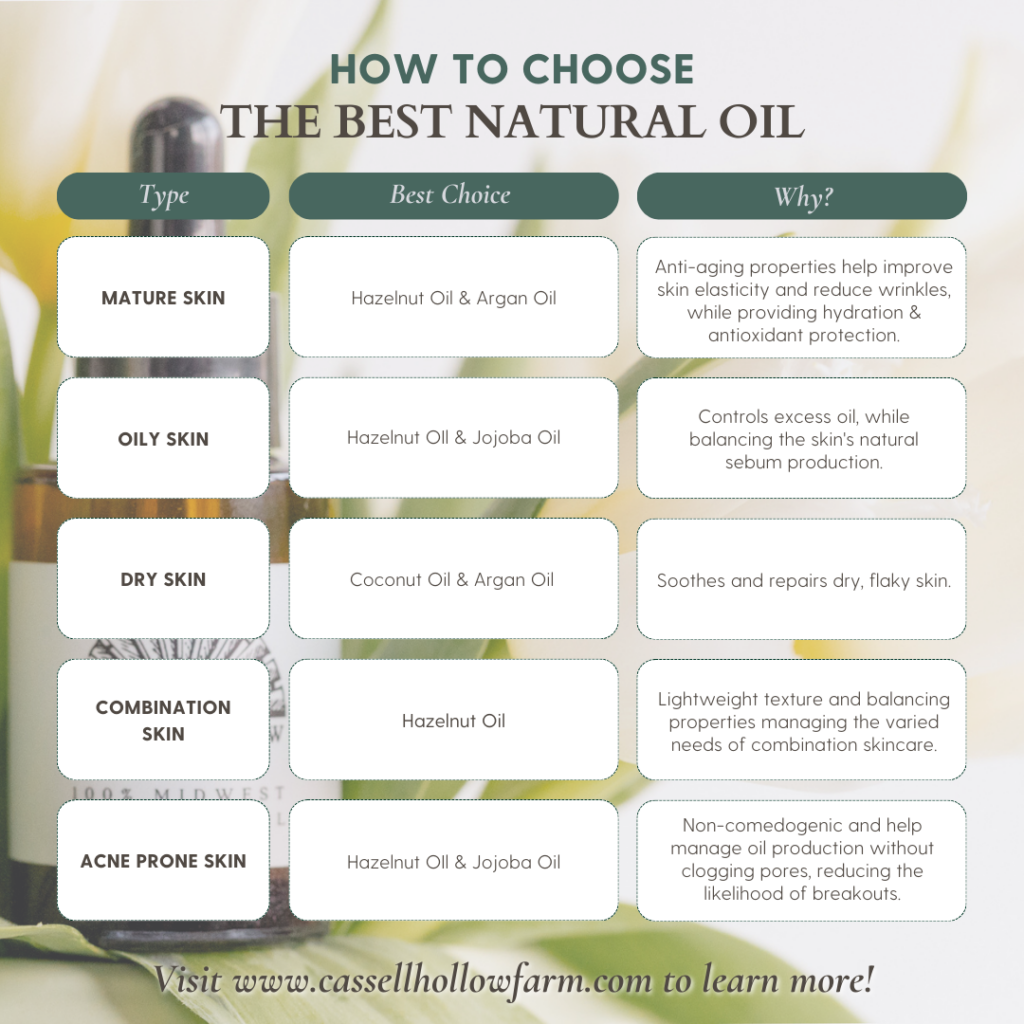
Dry Skin
- Best Choices: Coconut oil and argan oil
- Reason: Both are rich and provide deep hydration, helping to soothe and repair dry, flaky skin.
Oily Skin
- Best Choices: Hazelnut oil and jojoba oil
- Reason: Hazelnut oil’s astringent properties help control excess oil, while jojoba oil helps balance the skin’s natural sebum production.
Combination Skin
- Best Choice: Hazelnut oil
- Reason: Hazelnut oil’s benefits include its lightweight texture and balancing properties, which make it ideal for managing the varied needs of combination skincare.
Acne-Prone Skin
- Best Choices: Hazelnut oil and jojoba oil
- Reason: Both oils are non-comedogenic and help manage oil production without clogging pores, reducing the likelihood of breakouts.
Mature Skin
- Best Choices: Argan oil and hazelnut oil
- Reason: Argan oil’s anti-aging properties help improve skin elasticity and reduce wrinkles, while hazelnut oil provides hydration and antioxidant protection.
How to Incorporate Hazelnut Oil into Your Skincare Routine
Cleansing
Hazelnut oil is a cleansing option. Apply a small amount to damp skin and massage gently for a few seconds. Then, wipe the oil away with a warm, wet cloth. This helps remove makeup and impurities without stripping the skin of its natural oils.
Moisturizing
After cleansing and toning your skin, apply a few drops of hydrating hazelnut oil to your face and neck. Its quick absorption makes it an excellent choice for morning and evening routines.
Targeted Treatments
Hazelnut oil is a spot treatment for areas requiring extra attention, such as dry patches, fine lines, and acne. Dab a small amount onto the affected area and gently massage in.
DIY Personal Recipes using Hazelnut Oil
- Face Mask: Mix hazelnut oil with honey and yogurt for a hydrating and soothing face mask.
- Exfoliator: Combine hazelnut oil with sugar and a few drops of essential oil for an exfoliating scrub.
- Hair Treatment: Apply hazelnut oil to the ends of your hair. This will help nourish and prevent split ends.
Whether to incorporate hazelnut oil vs other natural oils into your skincare routine will depend on your skin type and specific needs. With the benefits of lightweight texture, non-comedogenic properties, and astringent qualities, hazelnut oil is an excellent option for oily, combination, and acne-prone skincare. However, it also offers significant benefits for dry and mature skin, making it a versatile addition to any skincare regimen.
In comparison, coconut oil provides deep hydration but may be too heavy for those with oily skin. Jojoba oil most closely mimics the skin’s natural sebum and is suitable for all skin types, while argan oil offers rich nourishment and anti-aging benefits.
Understanding each oil’s unique properties and benefits enables you to make informed choices that enhance your skincare routine which will indeed leave you with skin that remains healthy, hydrated, and radiant. Whether you choose hazelnut oil vs other oils, incorporating these potent ingredients into your daily regimen can significantly improve your skin’s appearance and overall health.
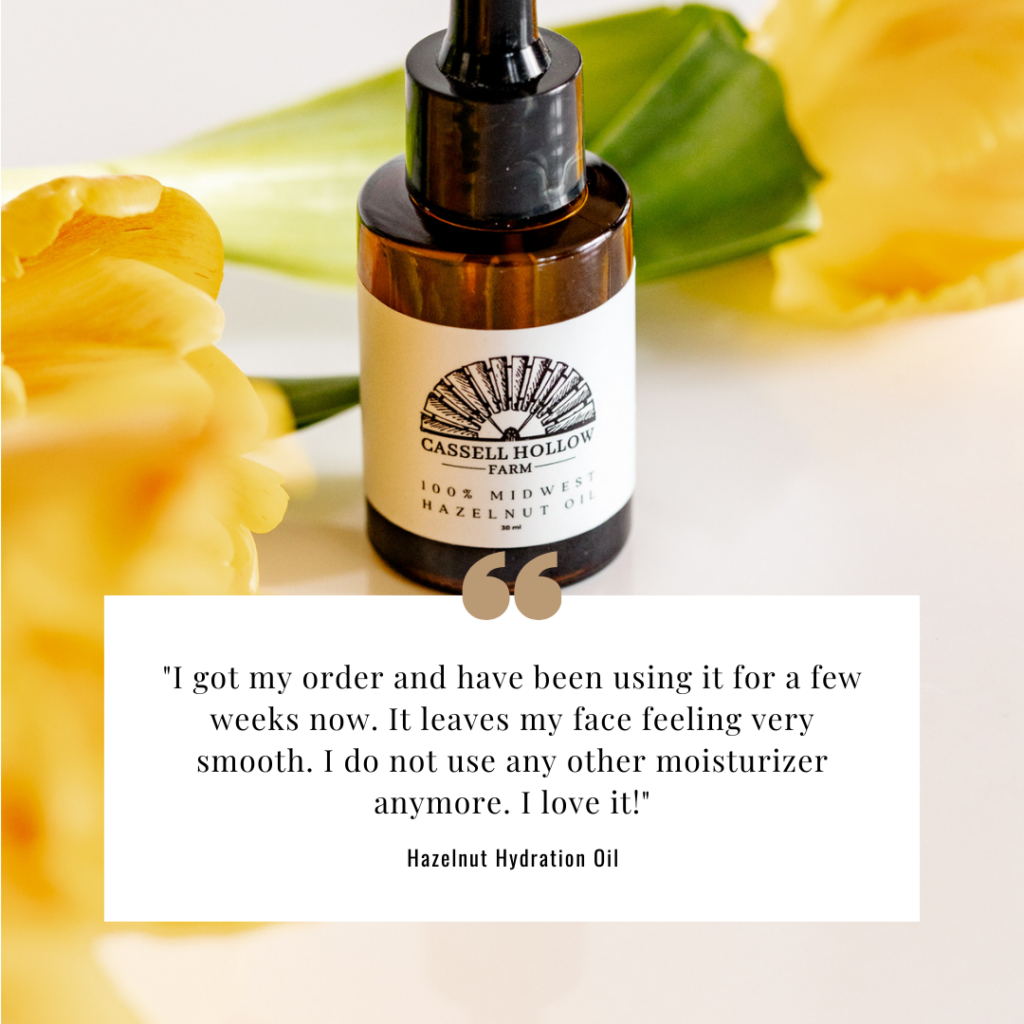
Shop Cassell Hollow Farm’s Hazelnut Hydration Oil:
Some of the links included in this post are considered affiliate links. They pay us a small commission to recommend our favorite products at no extra cost to you. Our full disclosure is available here. Thanks for supporting Cassell Hollow Farm!

PLEASE COMMENT BELOW